

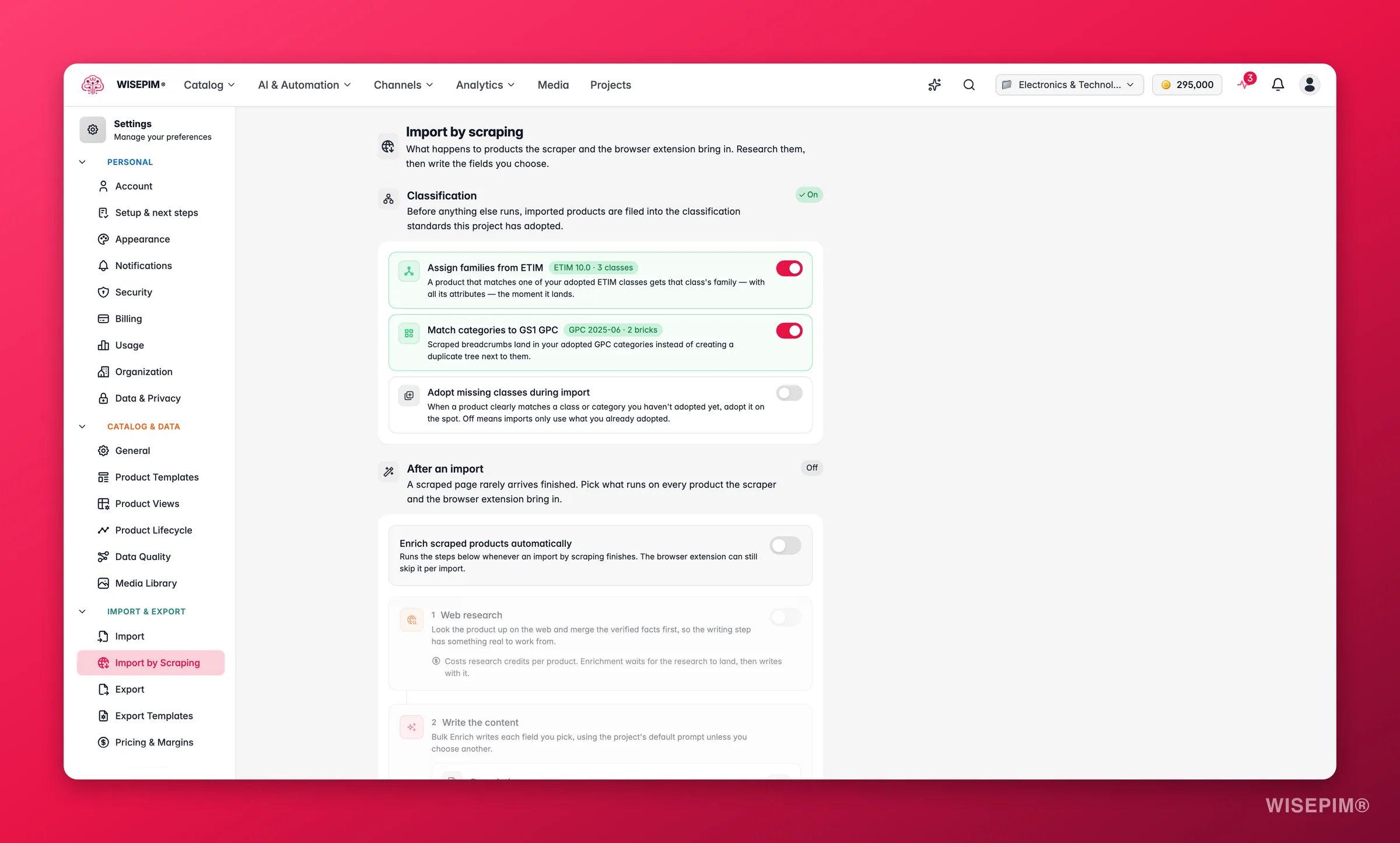
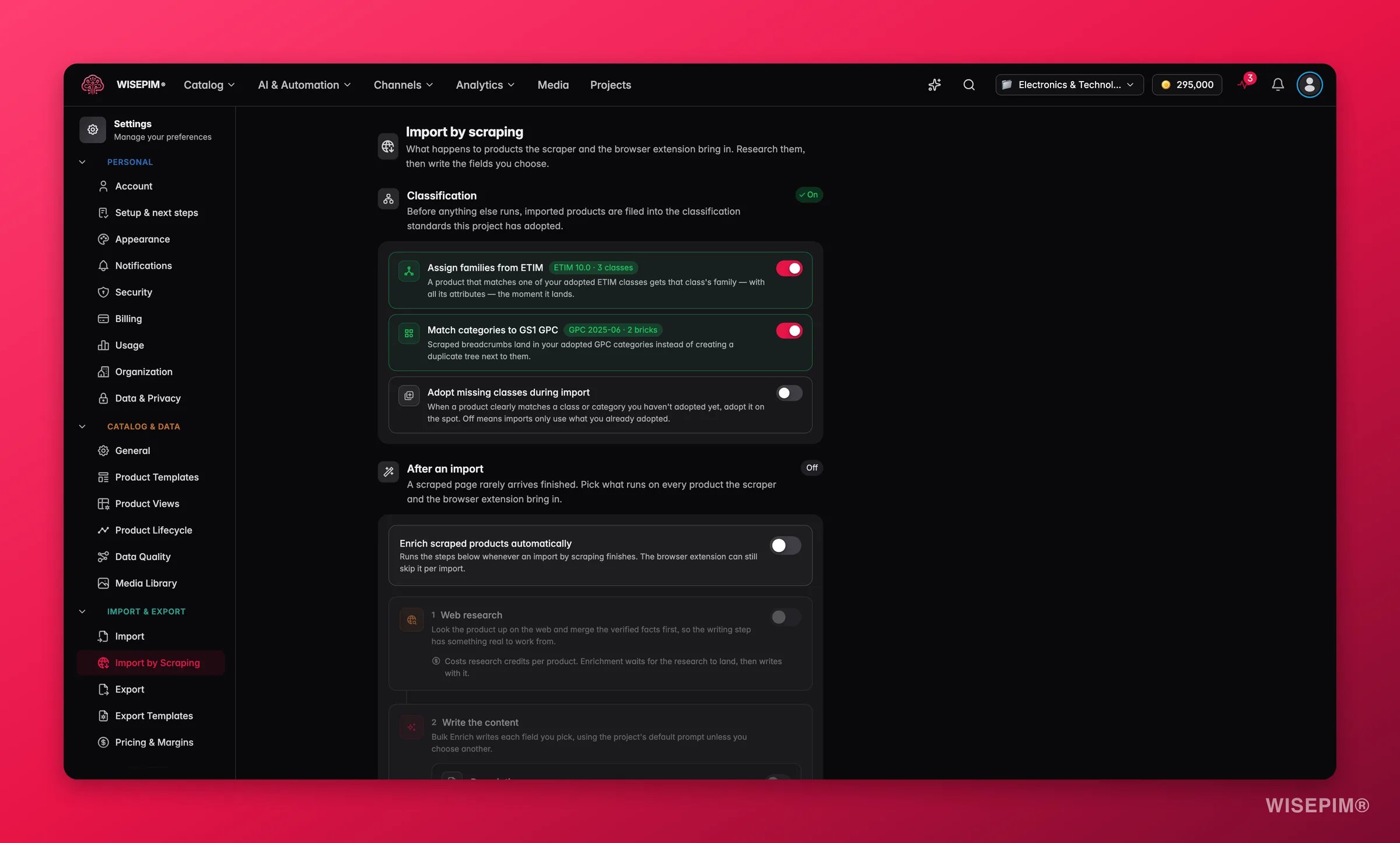
These settings are project-wide. The browser extension can skip the enrichment chain for a single import (useful when you grab one product just to look at it), but classification always runs - it is free and structural.
Classification
If your project has adopted classification standards, imported products are filed into them before anything else runs:
The section shows which release you’re on and how many classes or bricks you’ve adopted (for example “ETIM 10.0 · 24 classes”). Until you’ve adopted at least one standard, the toggles stay inert and the section links you to Browse ETIM classes and Browse GPC categories to set that up first.
After an import: the enrichment chain
Turn on Enrich scraped products automatically and the steps below run, in order, whenever an import by scraping finishes.Step 1 - Web research
Looks each product up on the web and merges the verified facts first, so the writing step has something real to work from. This costs research credits per product, and enrichment waits for the research to land before writing. This step needs the Pro plan or higher. Without it you can still run web research by hand from the products table. How research behaves - focus, allowed sources, which fields it may update - comes from Web Research settings.Step 2 - Write the content
Bulk Enrich writes each field you pick, using the project’s default prompt unless you choose another per field:- Descriptions
- Short descriptions
- Titles
- SEO title and meta
- Attributes
Related
Web Scraping Import
The import flow these settings apply to.
Classification
Adopt the ETIM classes and GPC categories imports file into.
Web Research Settings
Control what research focuses on and which fields it updates.
Bulk Enrich
The writing step of the chain, also available on its own.