

This is the reverse of Feed Hub’s ChatGPT Shopping channel. Feed Hub pushes your products out so shoppers can find them. Connected apps let an assistant reach in to the catalog you work on.
Connect an assistant
You start from the assistant, not from WISEPIM: “Open the WisePIM connection in ChatGPT or Codex and choose Connect. Sign in to WisePIM, choose a project, and review the requested permissions.”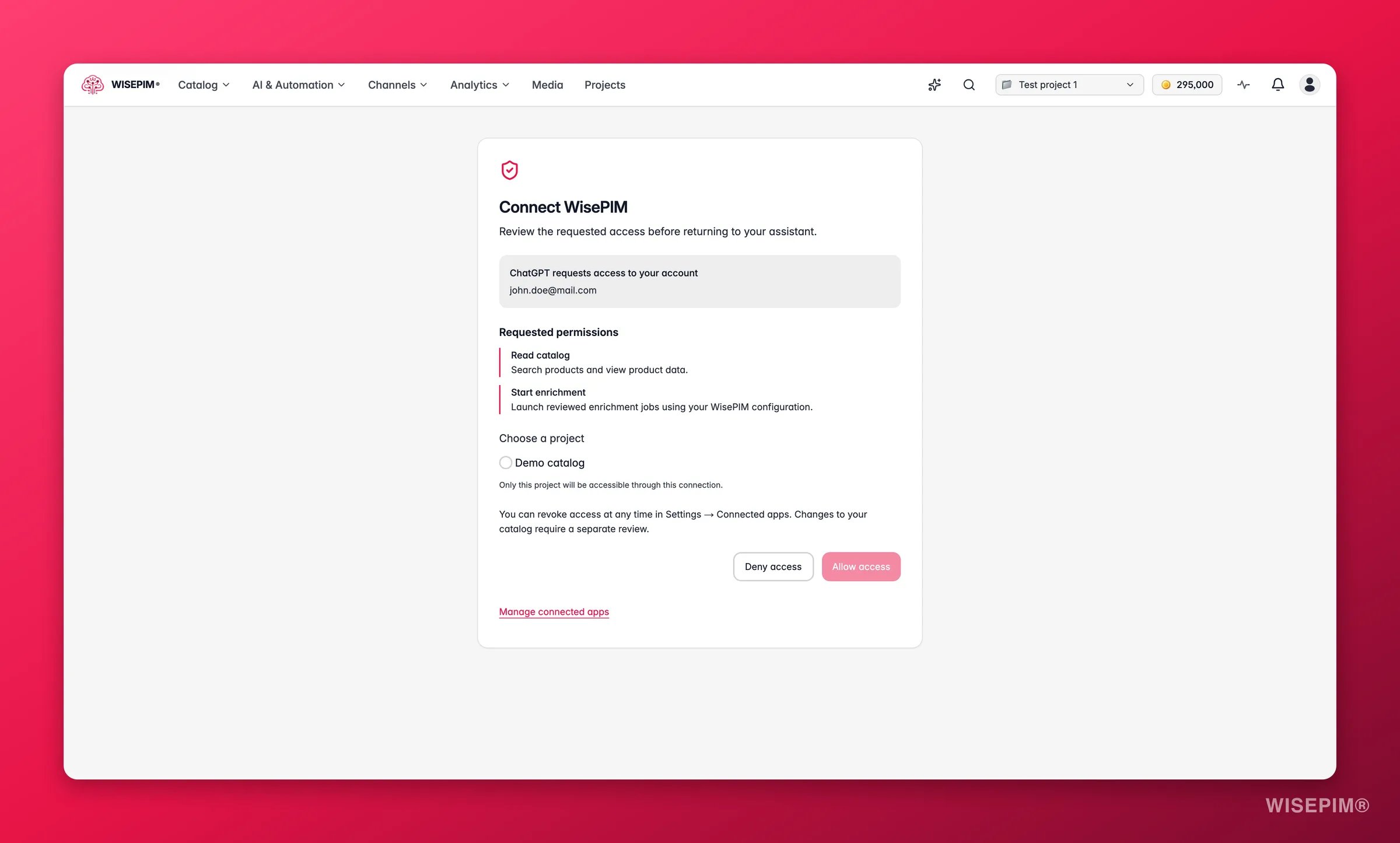
1
Check who is asking
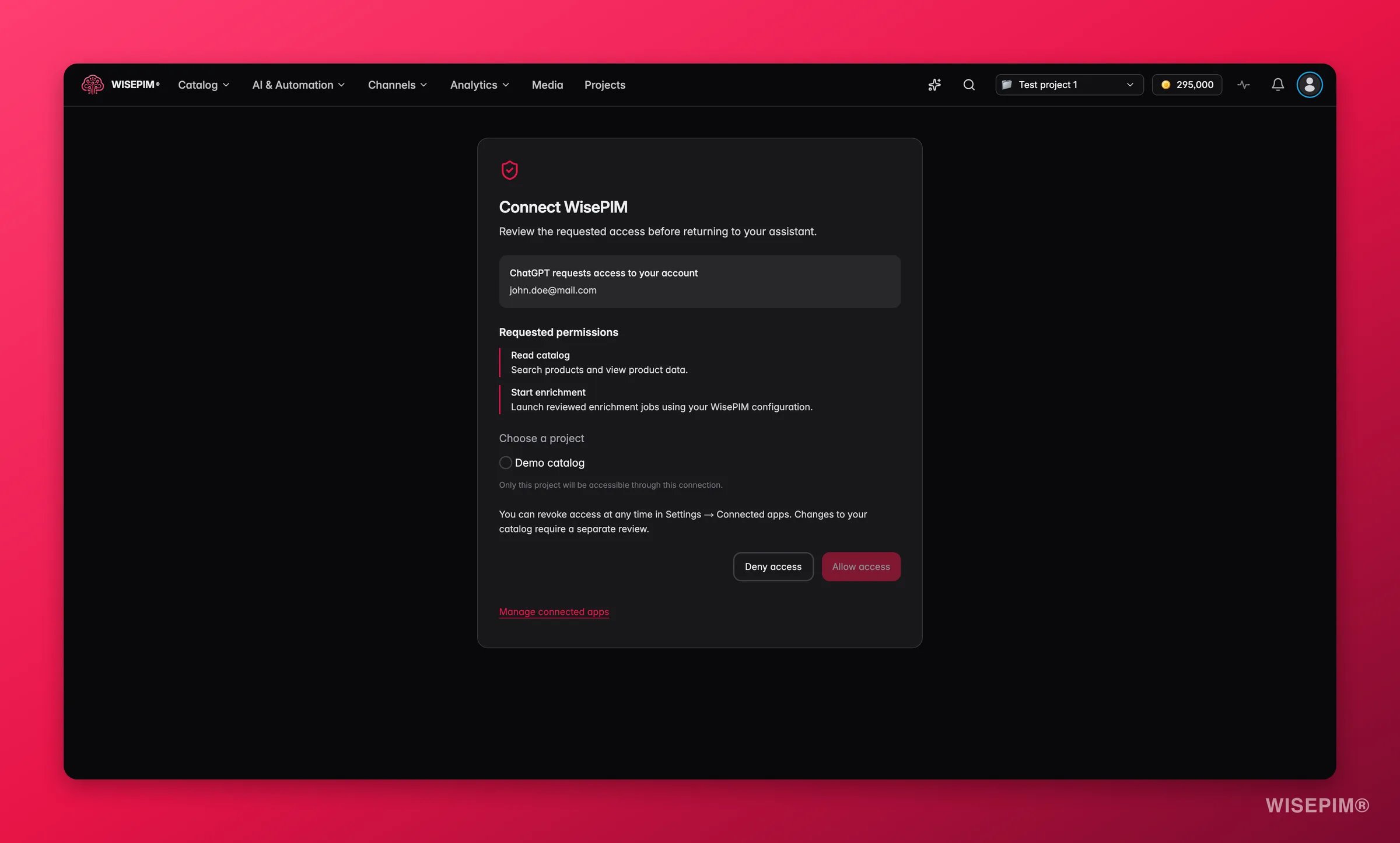
The top of the card names the assistant and the account it would connect to, so you can spot a request meant for a different login.
2
Read the requested permissions
Each permission is listed with a plain-language description of what it allows. Nothing outside this list is granted.
3
Choose a project
Pick exactly one: “Only this project will be accessible through this connection.” Your other projects stay invisible to the assistant.
4
Allow or deny
Allow access returns you to the assistant, connected. Deny access ends it there.
When a request includes a permission that writes, only projects you can edit are offered. If none qualify: “No projects are available with the requested permissions. You can deny this request and ask your administrator for access.”
The permissions an assistant can ask for
Note what “Change catalog” actually means: prepare changes and apply ones you have already approved. Approving is a separate step, and it happens in WISEPIM.
Review what an assistant wants to change
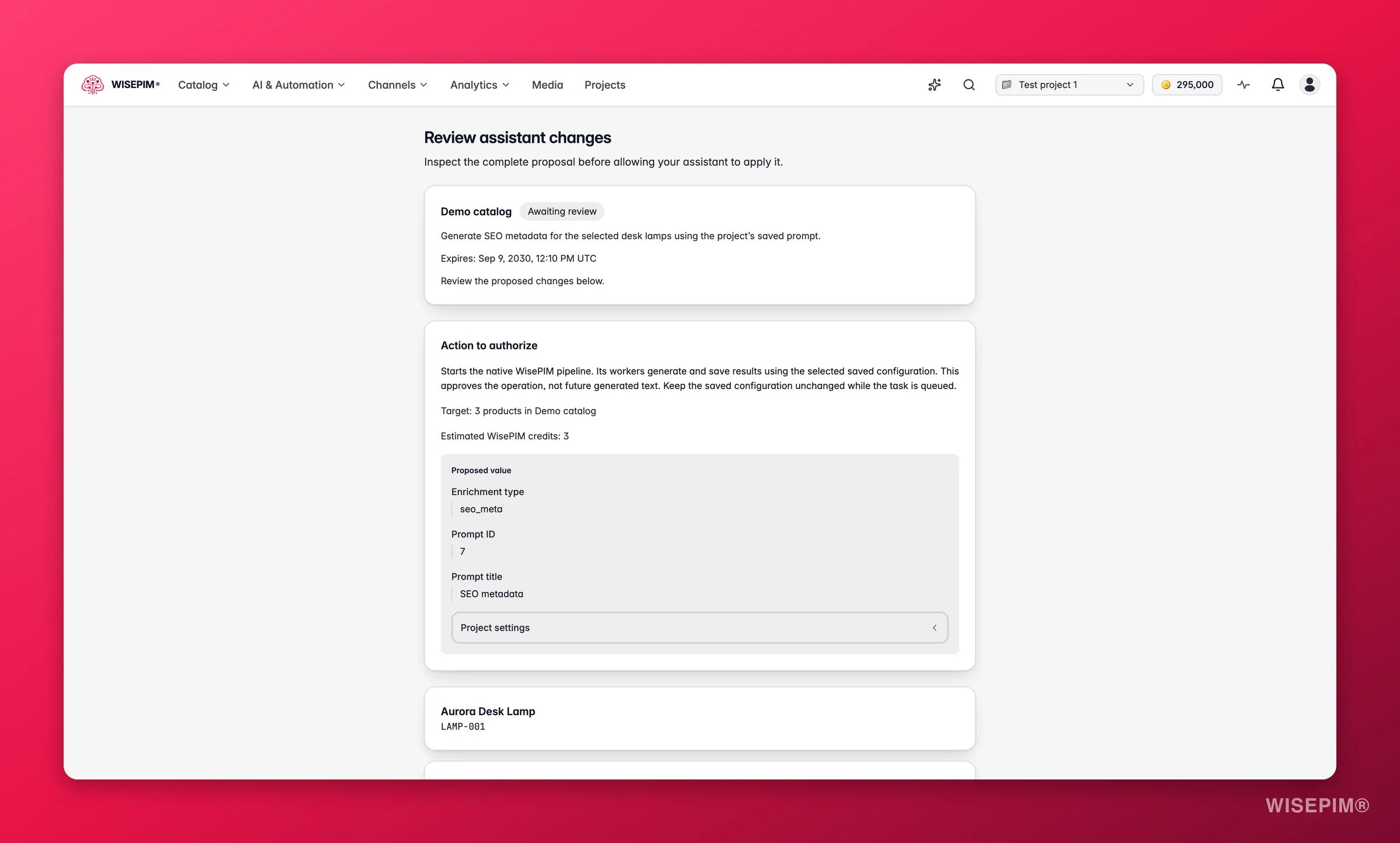
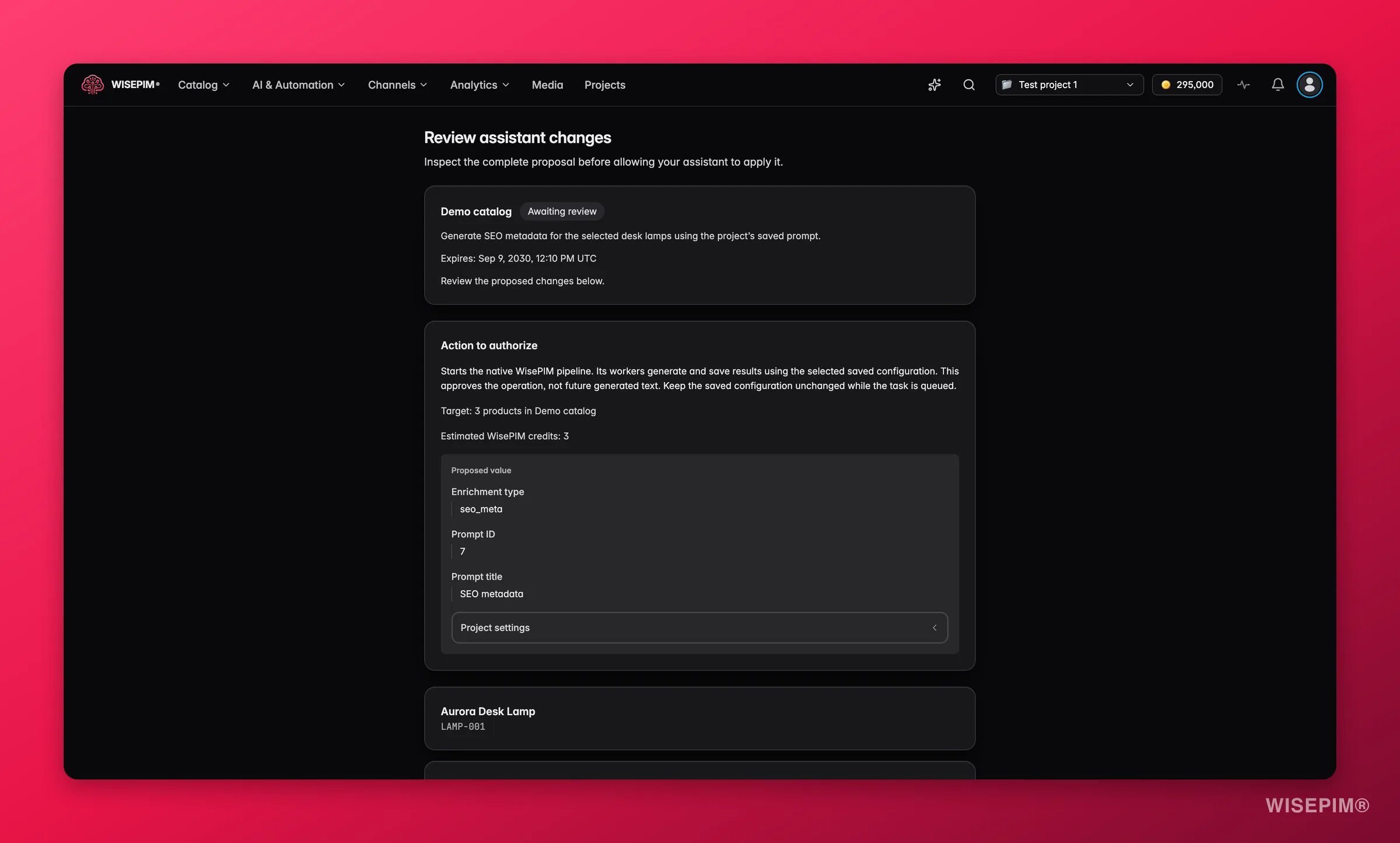
- The project and a status chip, plus a line telling you what to do next.
- The action to authorize, its target, and an estimated credit cost (“Estimated WisePIM credits: 120”). If the estimate cannot be worked out, it says so rather than guessing.
- Every affected product, and per field a side-by-side Current value and Proposed value, with the language shown for translated fields.
- An expiry date. Proposals do not sit around indefinitely.
What each status means
That last status is the important one: a proposal is tied to the exact data you looked at. If a product moves while you are reading, WISEPIM refuses to apply stale content and makes the assistant produce a new preview.
Manage and revoke connections
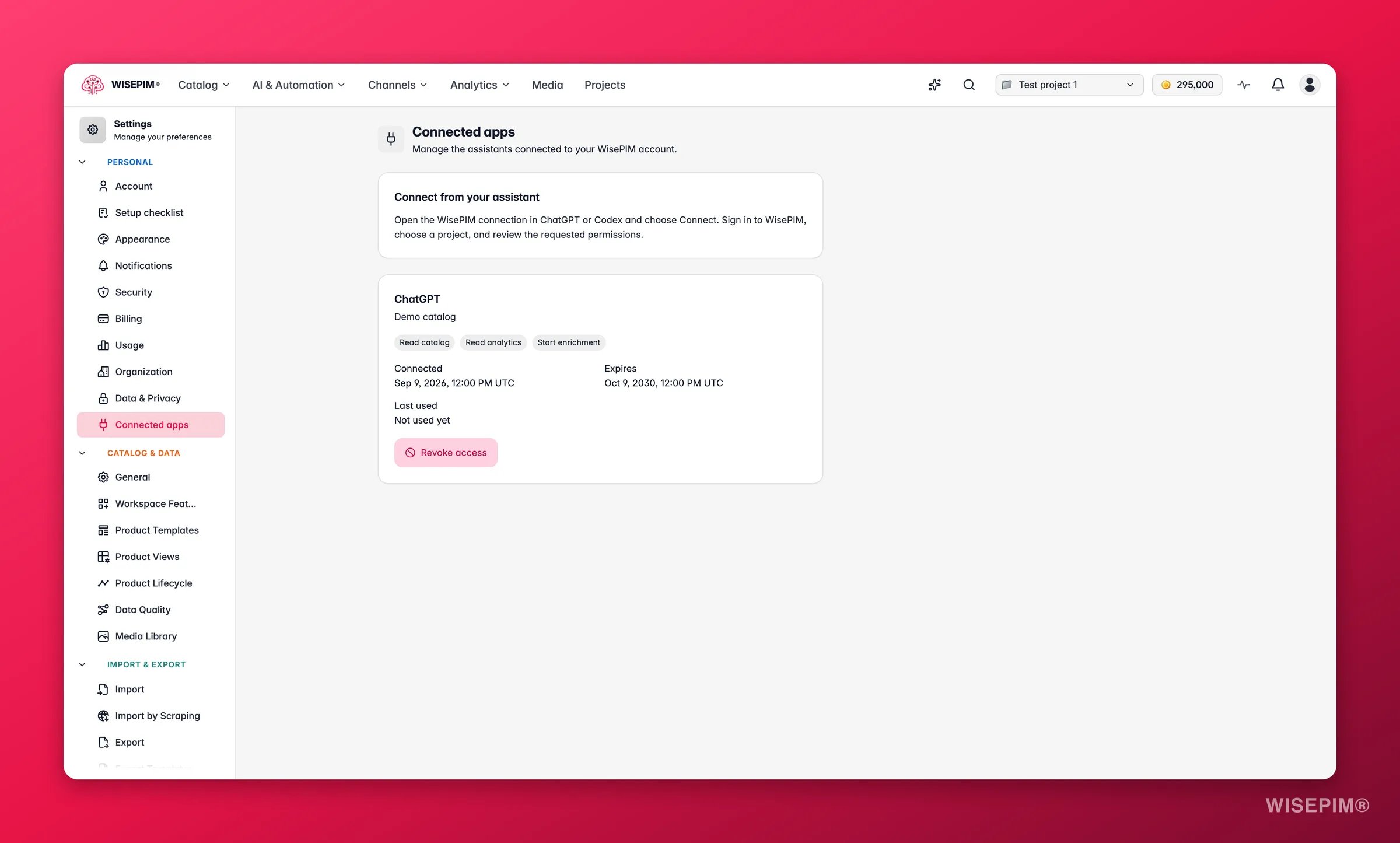
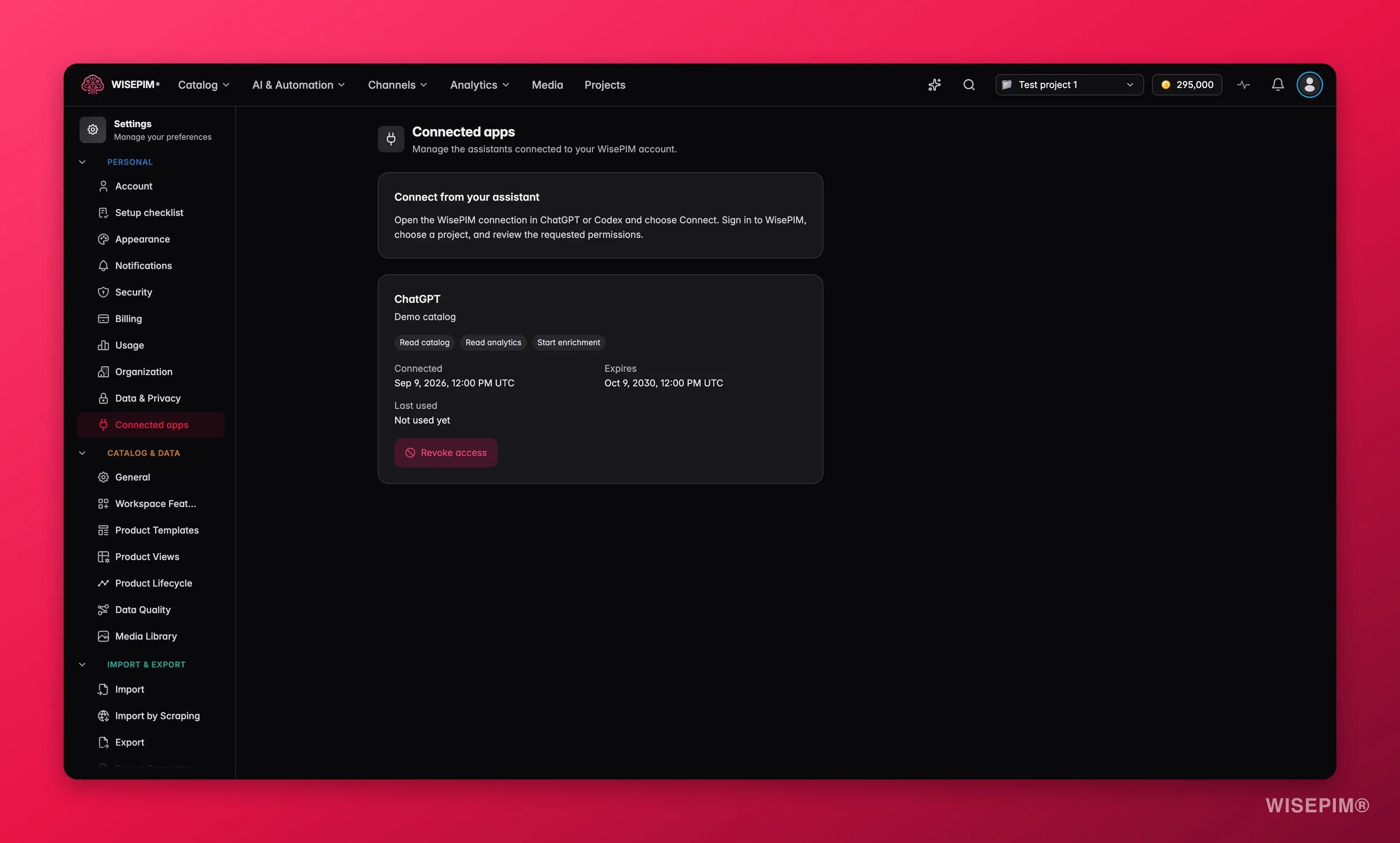
Every connection on the page shows the assistant, the project it reaches, its permission chips, and three dates: Connected, Expires, and Last used (or “Not used yet”). Connections expire on their own; you do not have to clean them up by hand. To end one early, click Revoke access and then Confirm revocation. WISEPIM spells out the consequences first: “This stops new requests and invalidates pending approvals for this connection. Existing catalog data stays in WisePIM.” Revoking is per connection, not per assistant. If you connected the same assistant to two projects, revoke each one separately.Related
API Access
Connect your own code to the catalog through the REST API.
Security
Password, two-factor authentication, and active sessions.
Data & Privacy
What WISEPIM stores, exports, and deletes for your account.
AI Chat
The assistant built into WISEPIM, for when you would rather stay in the app.