You signed up yesterday and a 5,000-row export is waiting. Spend one hour on setup first, and every AI run afterwards comes out on-brand instead of generic.
You signed up yesterday, there is a messy 5,000-product export sitting on your desktop, and the obvious move is to upload it right now. Hold off for an hour. The usual complaint about AI-written product copy, that it reads generic and off-brand, is far cheaper to prevent here than to fix across 5,000 products in part 4. This part puts four things in place: your locales, your brand context, a default prompt per content type, and the defaults new products inherit. Budget about an hour here, and roughly five hours of hands-on work across the full five-part series, plus background time for the import and AI runs.
Before you start: you need a WISEPIM account and the file or store you plan to import from. Have your brand guidelines or tone-of-voice document open, you will paste from them into the Knowledge Library.
What you’ll get: a project with its markets and languages fixed, a Knowledge Library the AI can write from, and a default prompt for every content type, so your first enrichment run in part 4 sounds like your brand.
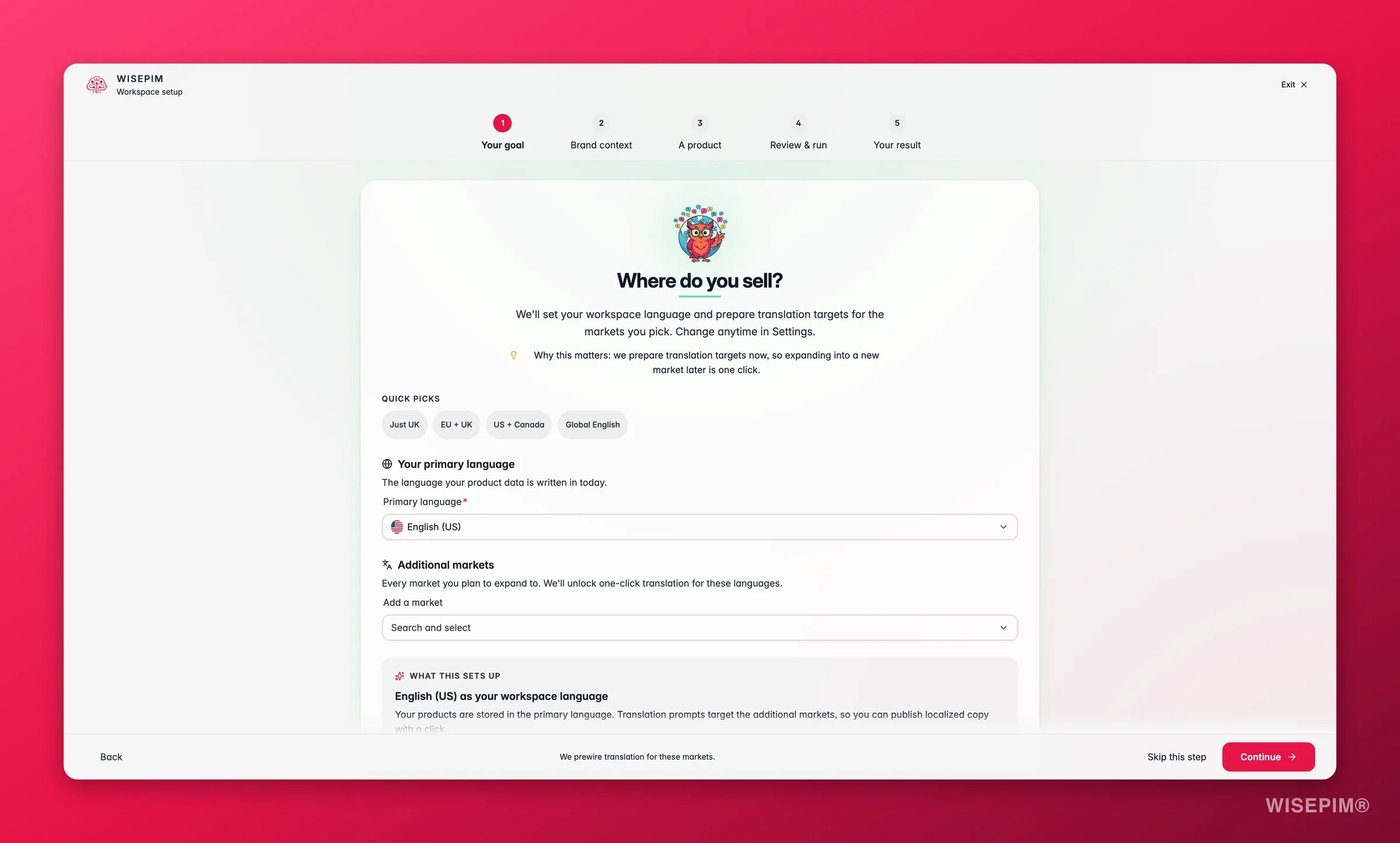
New accounts start with a setup wizard that runs once. Do it before anything else: the markets and languages you pick become your project’s locales, and the primary language is the source every translation starts from. Changing that on a catalog that already holds content is a much bigger decision than changing it on an empty one.
1
Work through the onboarding wizard
It asks about your company, your website, the markets you sell in, and the platforms you want to connect. The Quickstart walks through each screen.
2
Enter your real store URL
WISEPIM crawls it during setup and pre-fills your company details, industry, and brand context, so the AI has something to work from before you have written a word yourself.
3
Choose markets and languages deliberately
These become your project locales, and everything you import and translate later hangs off them. Decide now, while the catalog is empty.
4
Confirm the details in General settings
Open General settings and check the project name, industry, and target keywords. Industry shapes how the AI writes from here on; it does not rewrite anything that already exists.
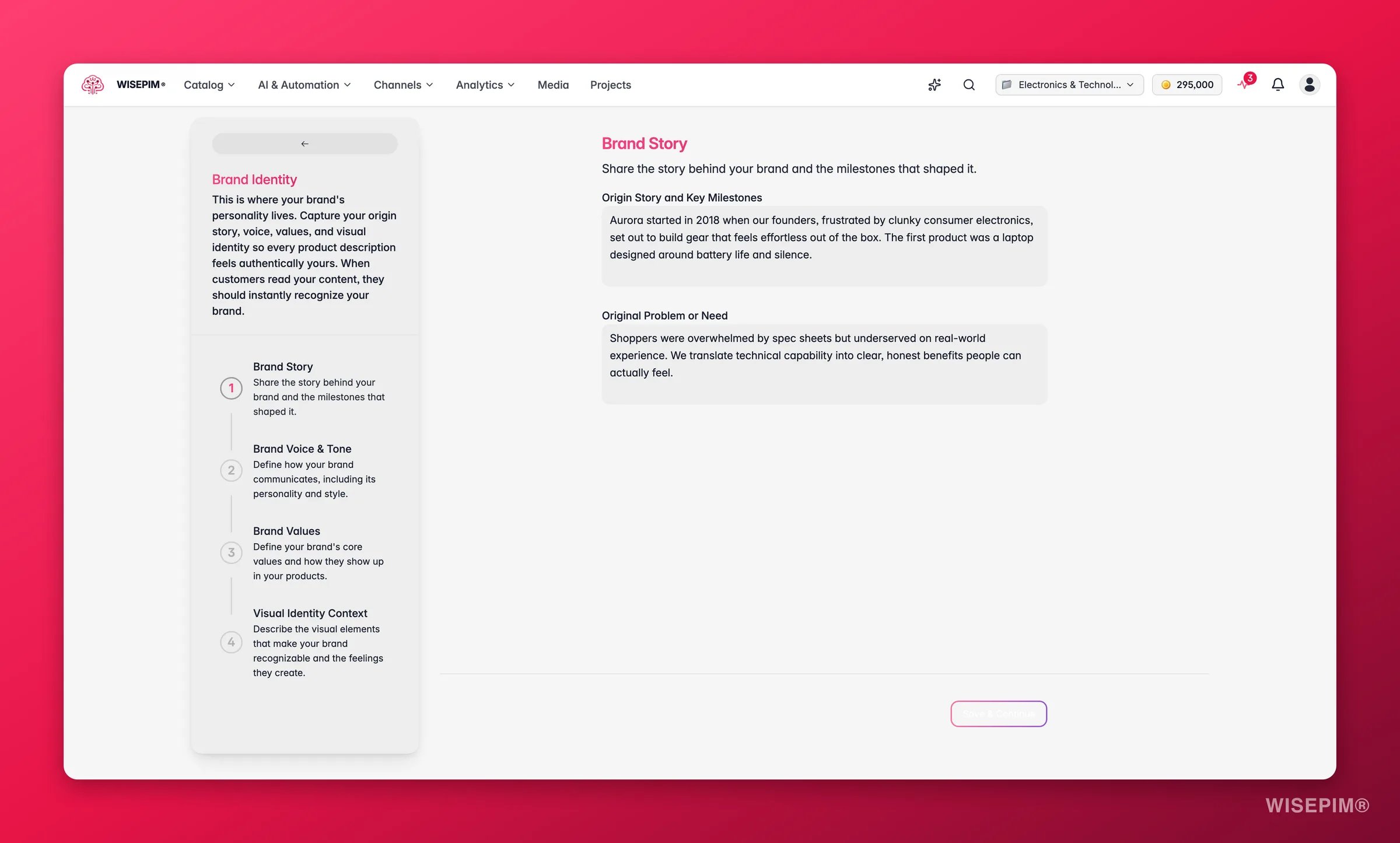
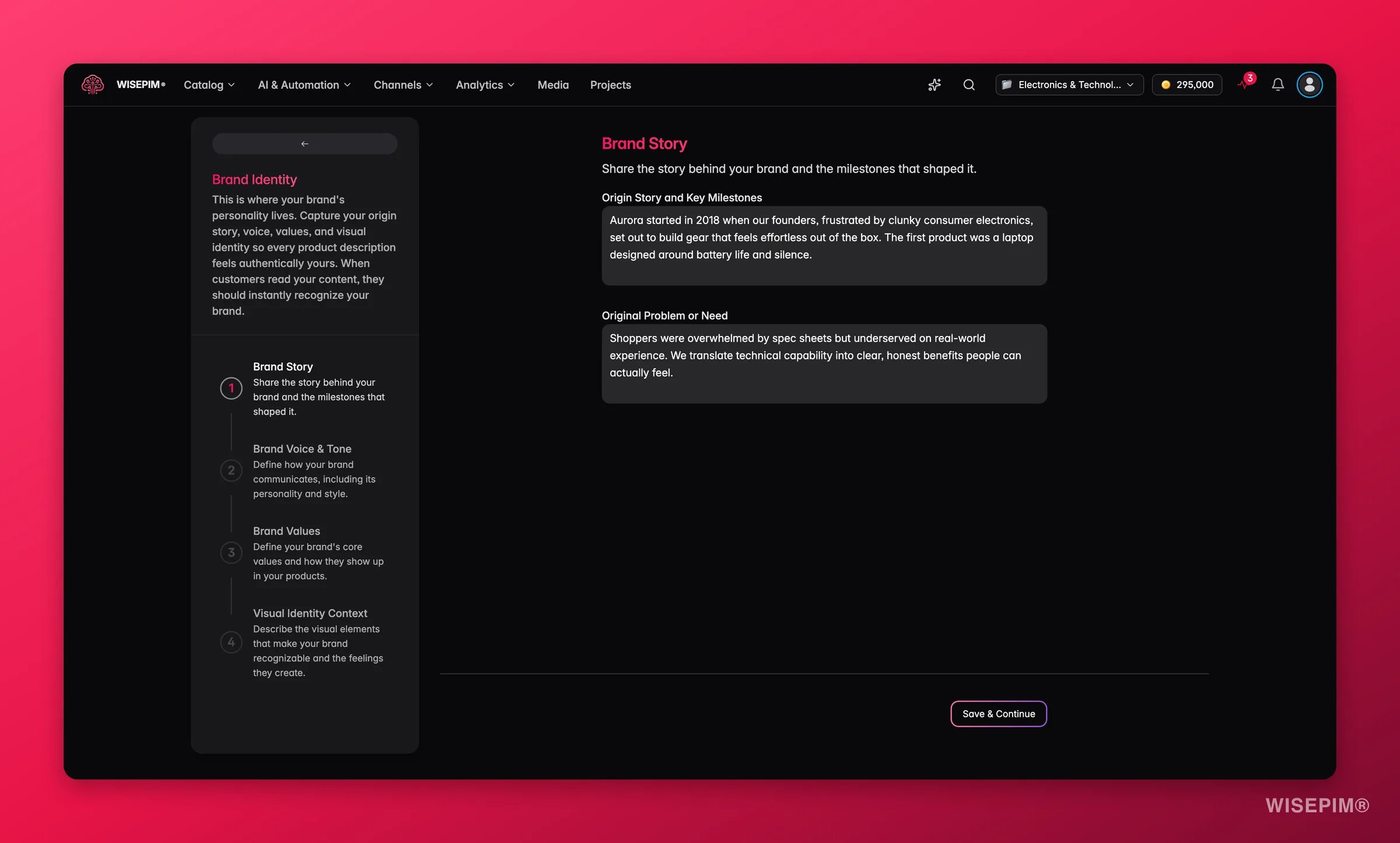
An empty Knowledge Library is the single biggest cause of bland AI output, and every AI feature reads from it at run time. An hour here improves every description, title, and translation you generate in part 4 and after. Start with brand identity: it is the foundation the other sections build on.
1
Open the Knowledge Library and start with brand identity
Reach the Knowledge Library from your main menu, open the brand identity card, and fill in your brand story, voice, and values. If output ever feels off-brand, this is the first place to look.
2
Add brand voice and target audience next
Concrete tone adjectives and the words you never use beat vague statements. Describe who you sell to, what they worry about, and the questions they ask before buying.
3
Cover value proposition and content requirements
Why customers pick you, and any rules your content must follow, such as required details or compliance wording. These two sections are what stop descriptions reading like every competitor’s.
4
Paste from documents you already have
Existing brand guidelines, a tone-of-voice deck, or customer research are the fastest source. Progress saves as you type, and each category shows its own completion percentage.
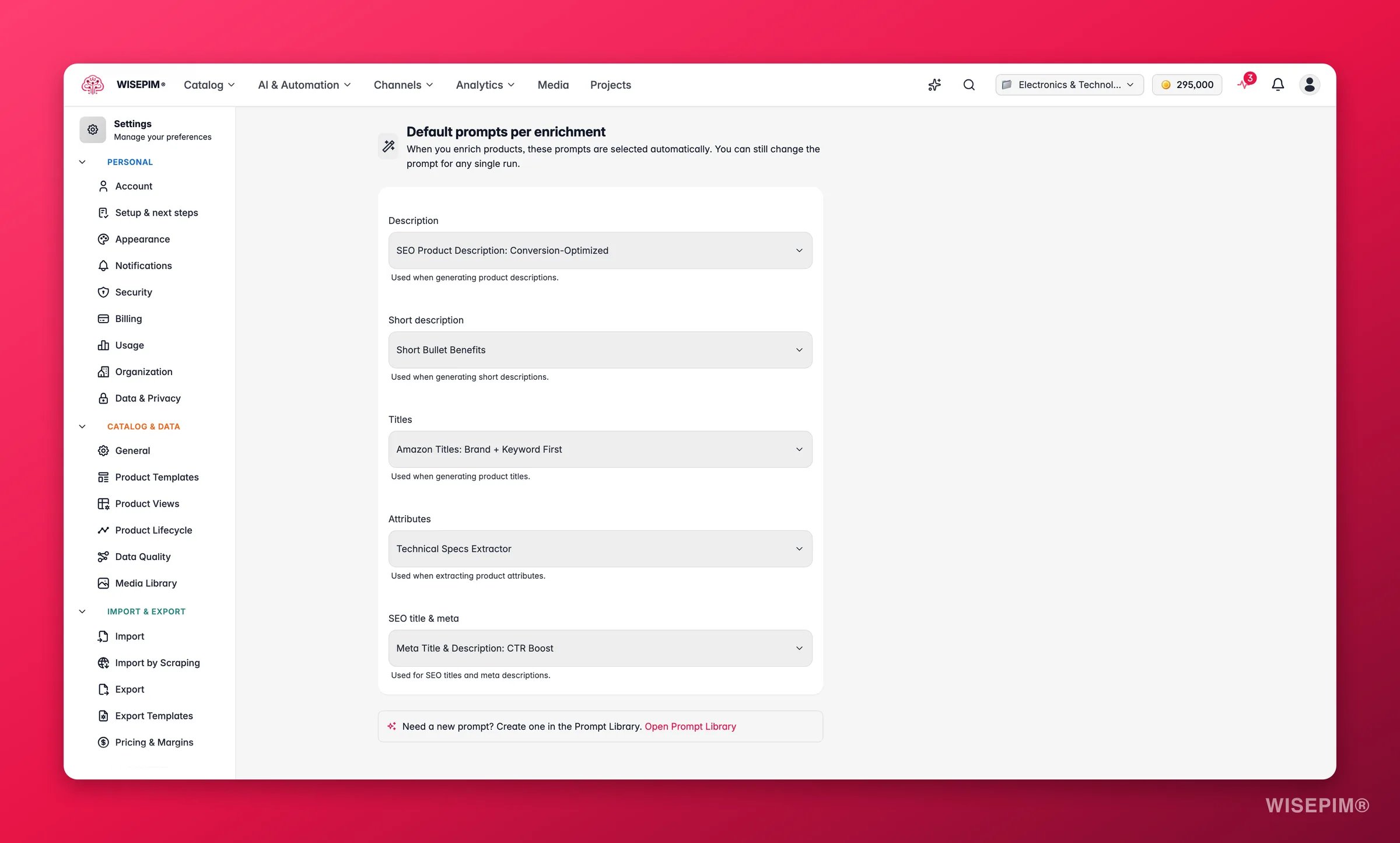
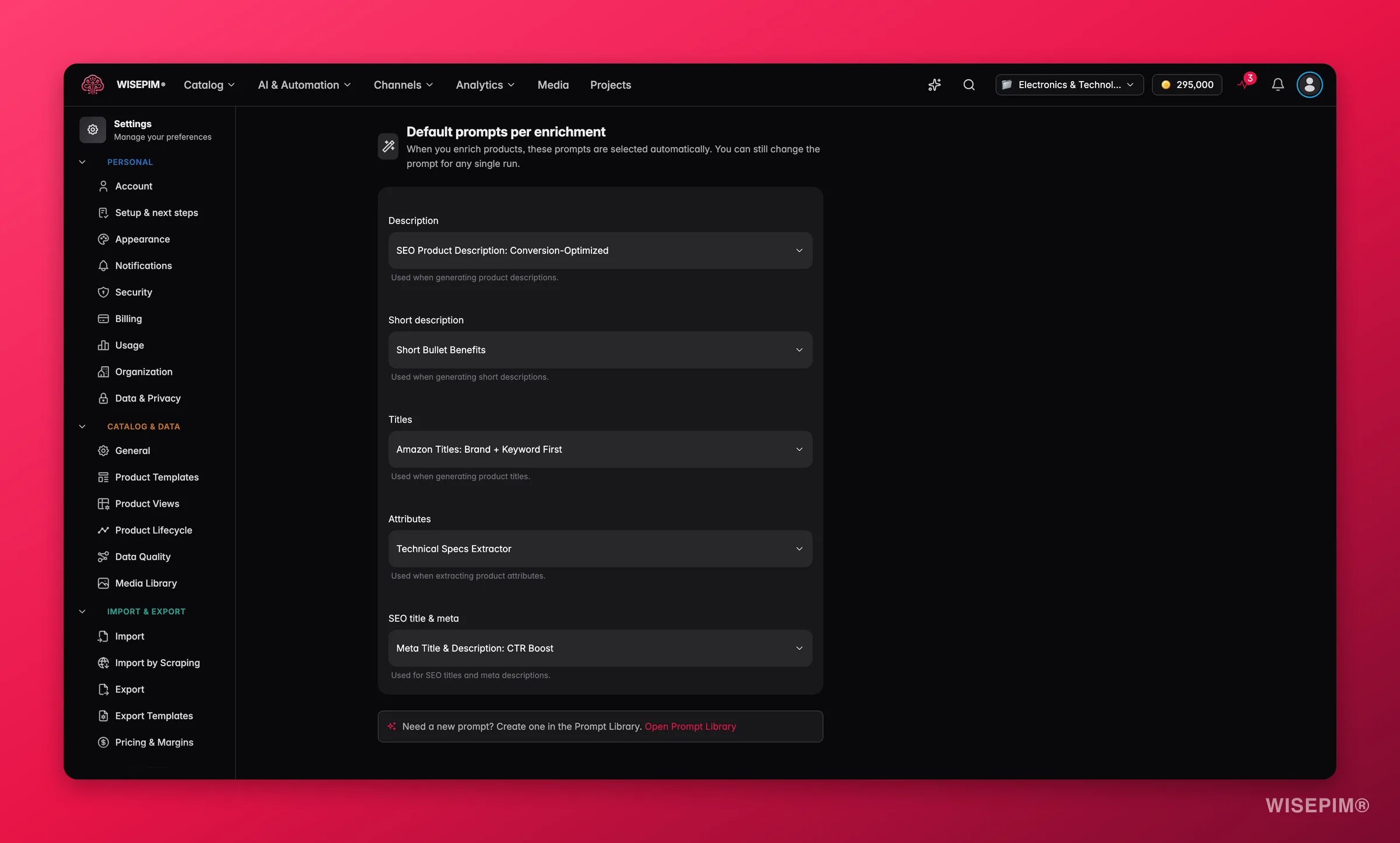
Pick one prompt per content type and set it as the default
Enrichment runs from prompts. Until a default exists for a content type, Auto-Fill skips that type, and you only find out as a greyed-out option inside the enrich modal in part 4. Ten minutes here removes that dead end before you have 5,000 products riding on it.
1
Start from the curated prompts
Open the Curated Prompts tab in the Prompt Library. It is ranked for your industry and tone, so the best fit is usually near the top. Save one per content type into your own collection rather than writing from scratch.
2
Try it on a real product
In the Prompt Lab, search a SKU, click Load Product, and test. You get the original and the generated version side by side and nothing is written to your catalog. Adjust one setting at a time and test again.
3
Set your defaults
In Enrich Prompts settings, choose a prompt for each enrichment type and save. Description and short description deliberately share one default.
4
Leave no dropdown on 'No default'
Every type without a default is a type Auto-Fill will not touch in part 4. An empty dropdown means you have no prompt of that type yet, so create one in the Prompt Library first.
Optional: defaults and keywords that fill the gaps
Your import file will not carry every field. These two settings decide what happens to the rest. Both only apply to products created after you save them, which is exactly why they belong before part 2 rather than after it.
1
Set your product defaults
In Product Templates, set the status, visibility, brand, and supplier new products should start with. Template defaults apply when a product is created, never when one is updated.
2
Add a SKU pattern if your file lacks SKUs
The same page builds SKUs from a pattern, with a live preview under the field. Leave it blank if your file already carries good identifiers.
3
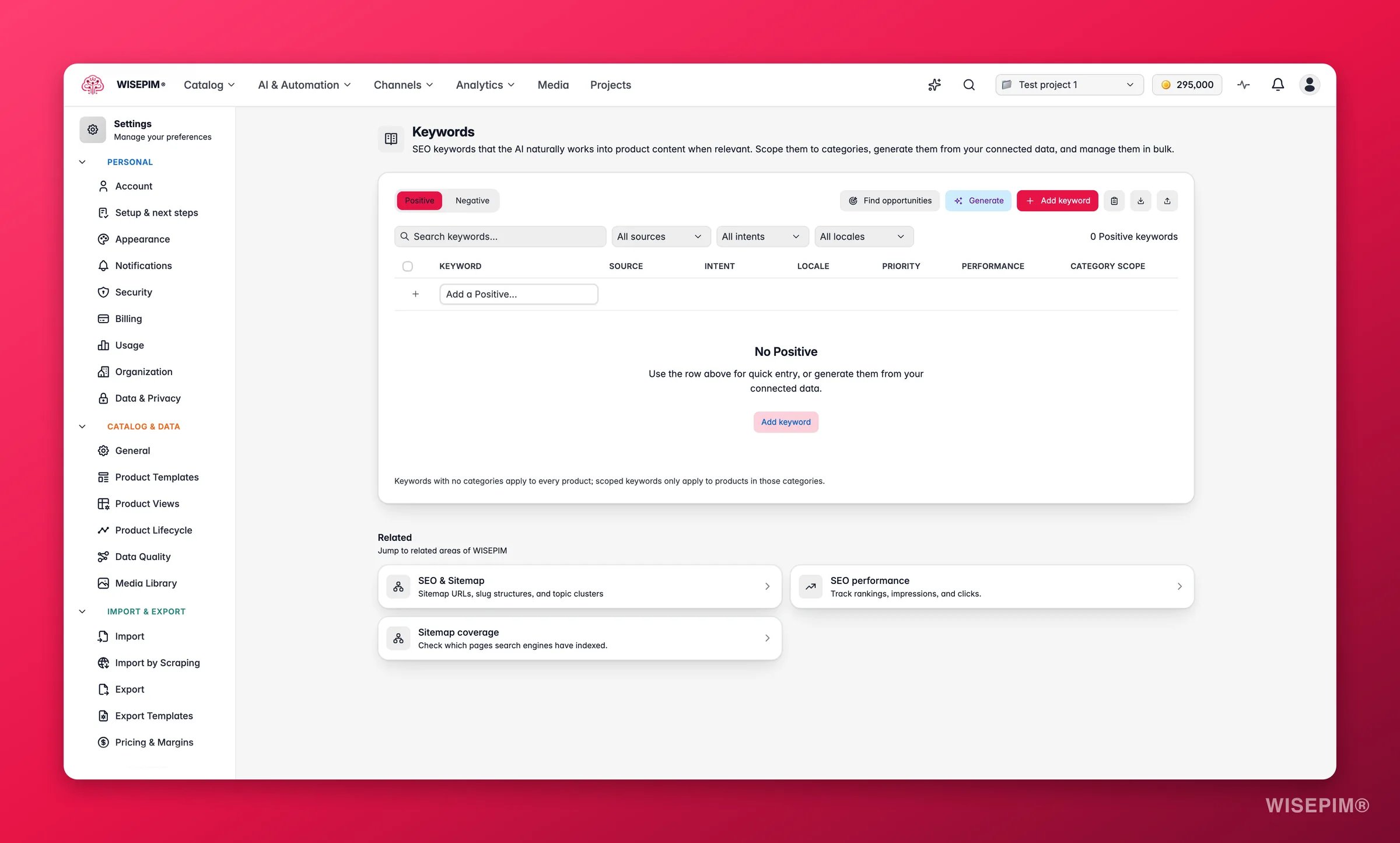
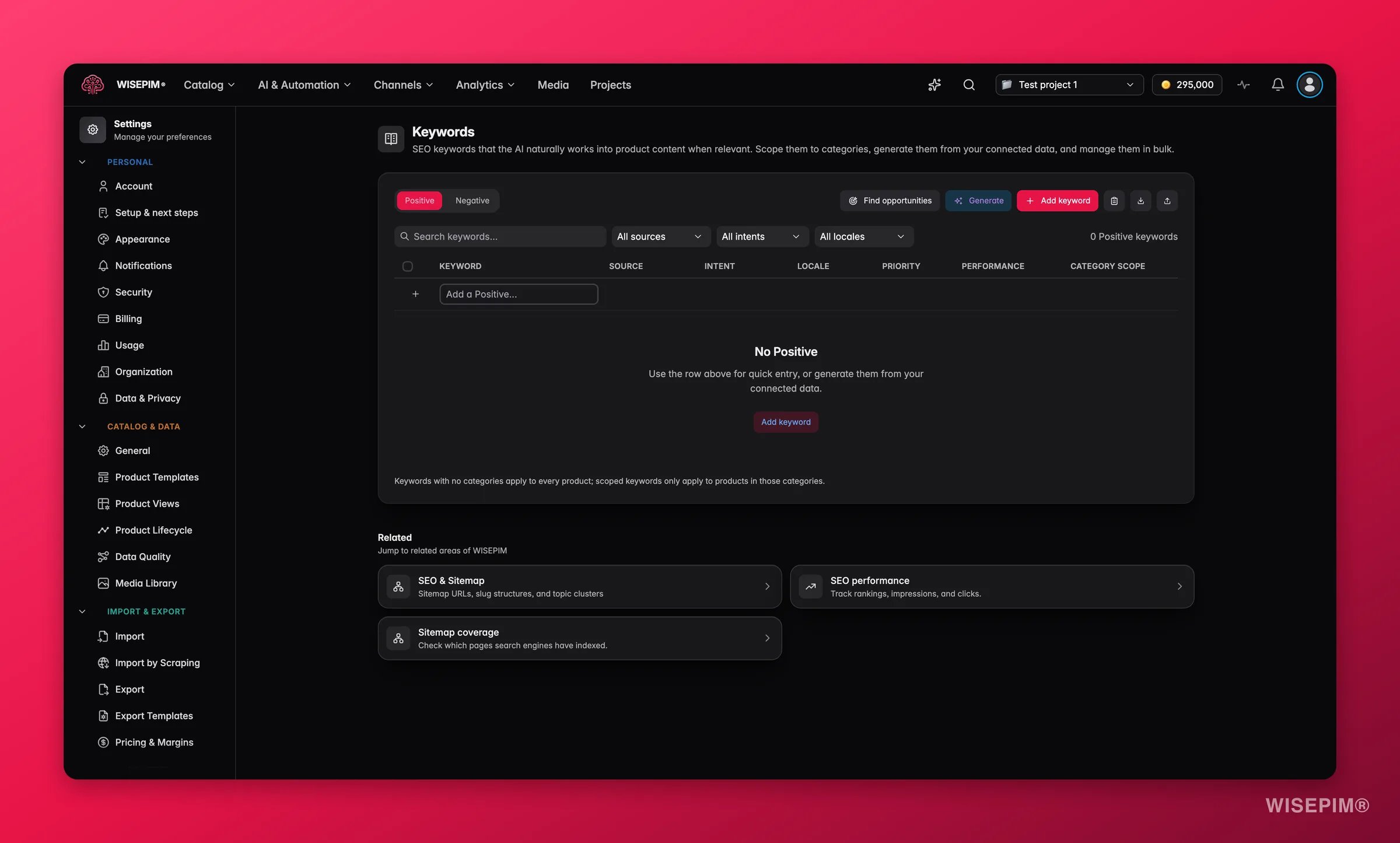
Build a focused positive keyword list
In Keywords, add the SEO terms you want to rank for. The AI weaves them in only where they fit, so a tight list beats a long one. Generate proposes terms from your own data.
4
Add negative keywords too
Competitor names and off-brand wording go in the Negative tab, and the AI keeps them out of generated content. Changes on this page save immediately, no save bar.
A greyed-out gap type has no default prompt and no override chosen for that run. Set a default in Enrich Prompts, or pick a prompt from the override dropdown in the panel itself.
A prompt dropdown is empty, so I can't set a default
Each dropdown only lists prompts matching that enrichment type, so an empty one means you have no prompt of that type yet. Create or save one in the Prompt Library first, then come back.
The AI output still reads generic
Thin brand voice and brand identity are the usual cause. Add concrete tone adjectives, example phrases, and your specific benefits to the Knowledge Library, then re-test the same product in the Prompt Lab.
A settings page asks me to pick a project first
Enrich Prompts, Export Templates, Keywords, and General settings are project-level. Choose a project in the project switcher, then reopen the page.
I already imported before reading this
Nothing is wasted. Fill the Knowledge Library and set your defaults now, then go to part 3: enrichment reads both at run time, not at import time.
Setup done. Part 2 takes the file itself, which is where the real damage usually happens.