

Before you start: finish part 4, and connect the destination on the Integrations page if you are publishing to a platform rather than a file.
Clear the gate before you press export
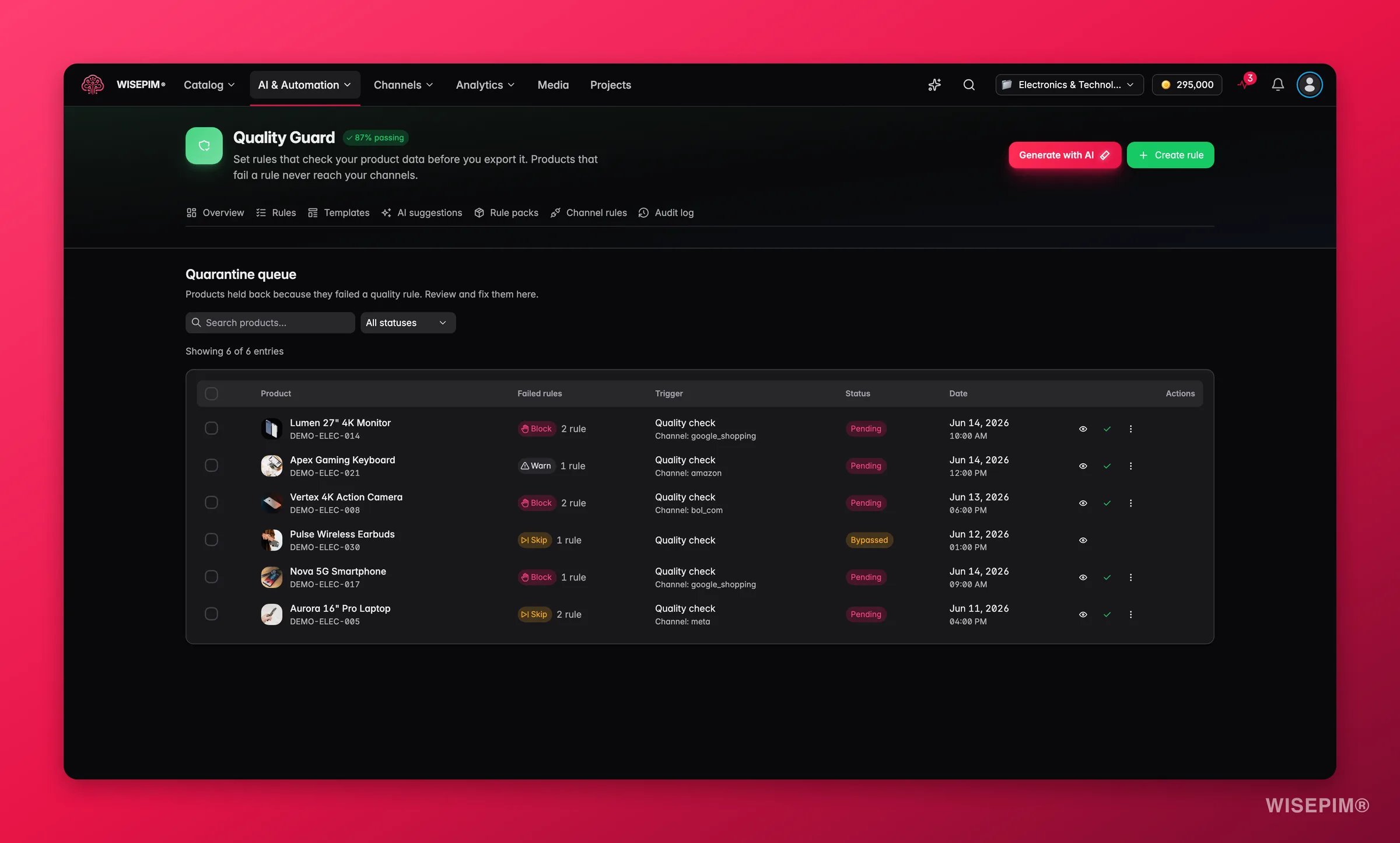
Quality Guard runs automatically on every export, sync, and publish, and rules with Block severity send products to quarantine, where they cannot be exported at all. Clearing the queue before you export is what stops “nothing was sent” from becoming a mystery after it.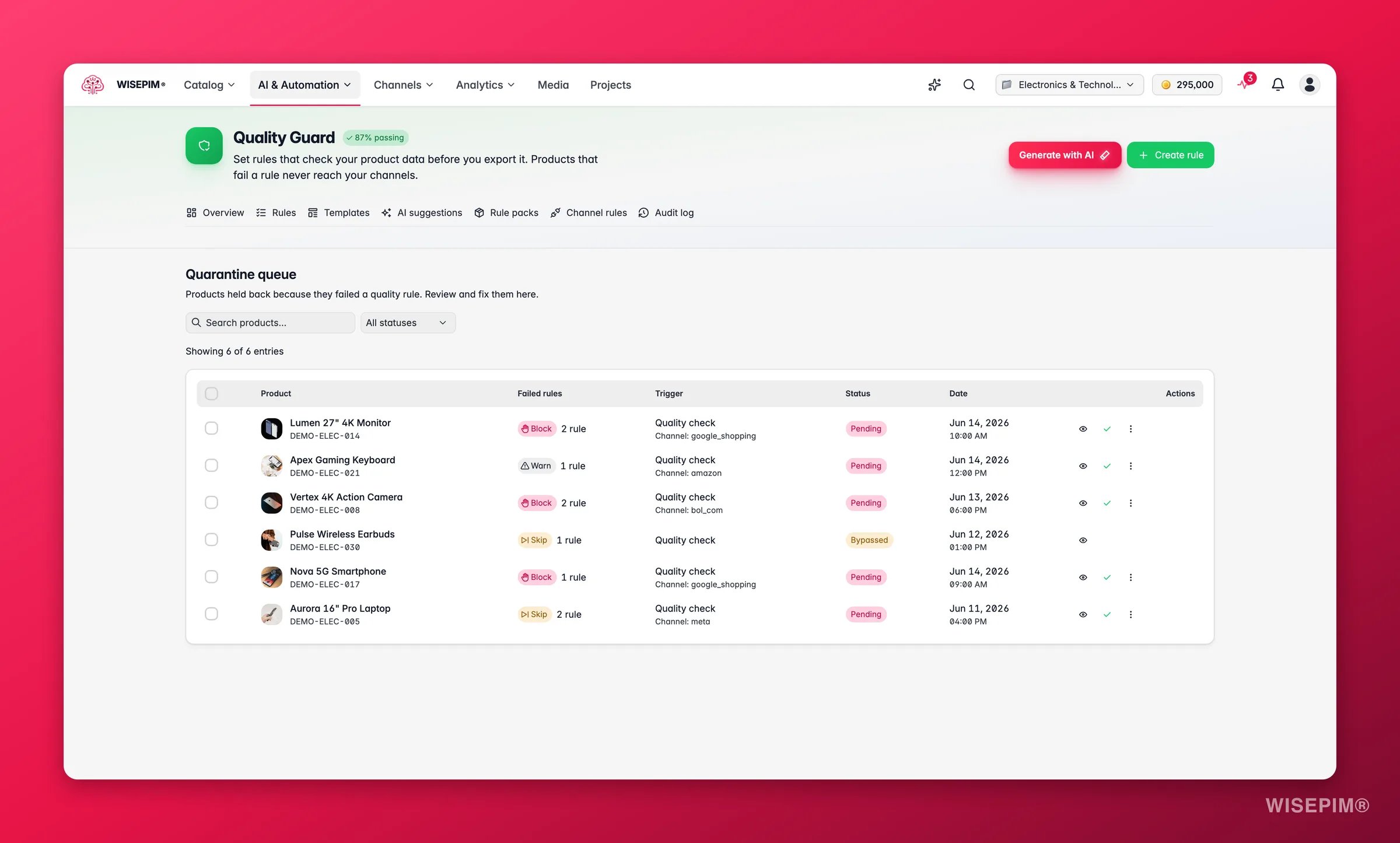
1
Read your compliance rate
The Quality Guard dashboard shows Compliance Rate, Quarantined Products, and a Top Failing Rules list. Start at the top of that list: fixing the top failing rule moves the most products at once.
2
Find the violators before they are blocked
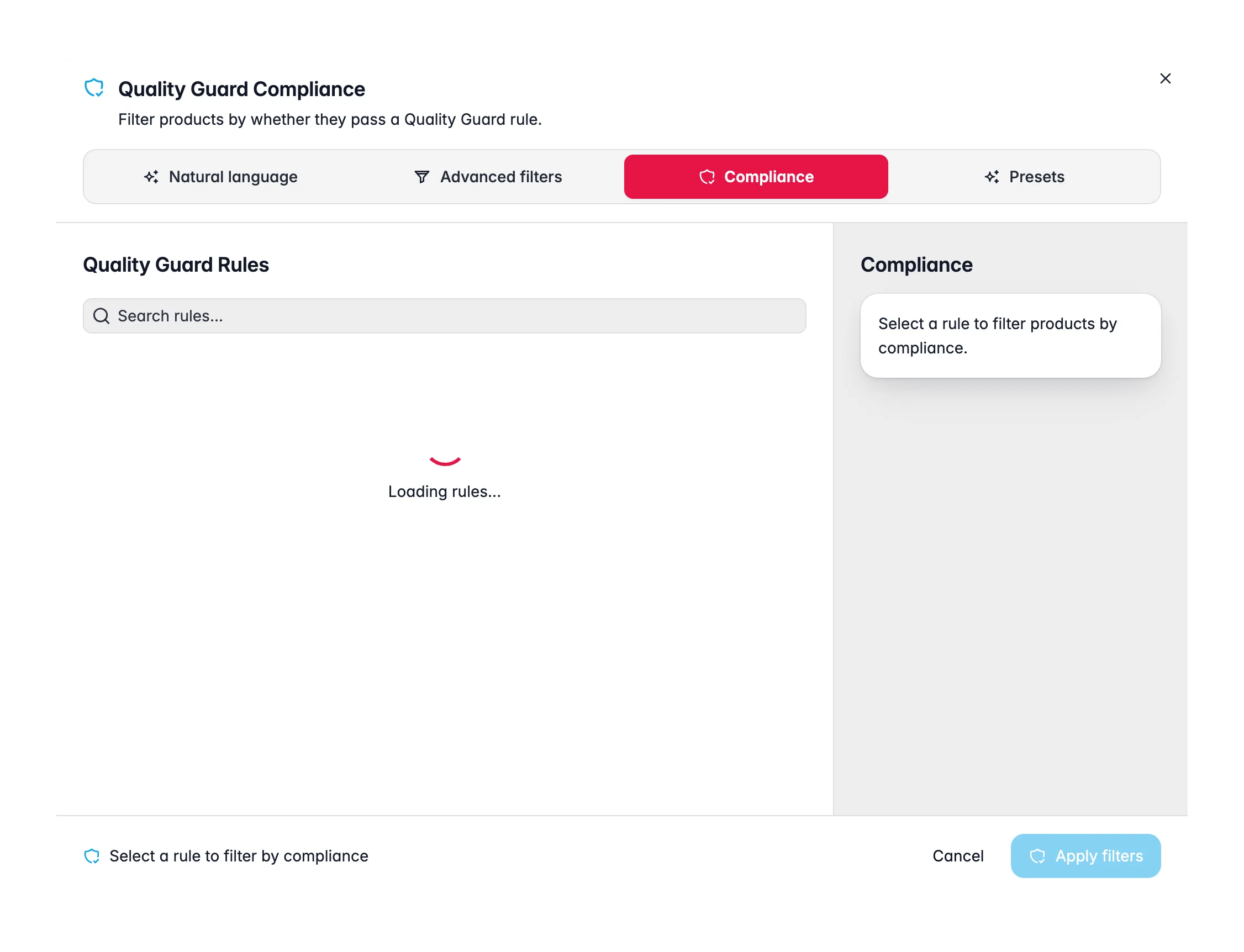
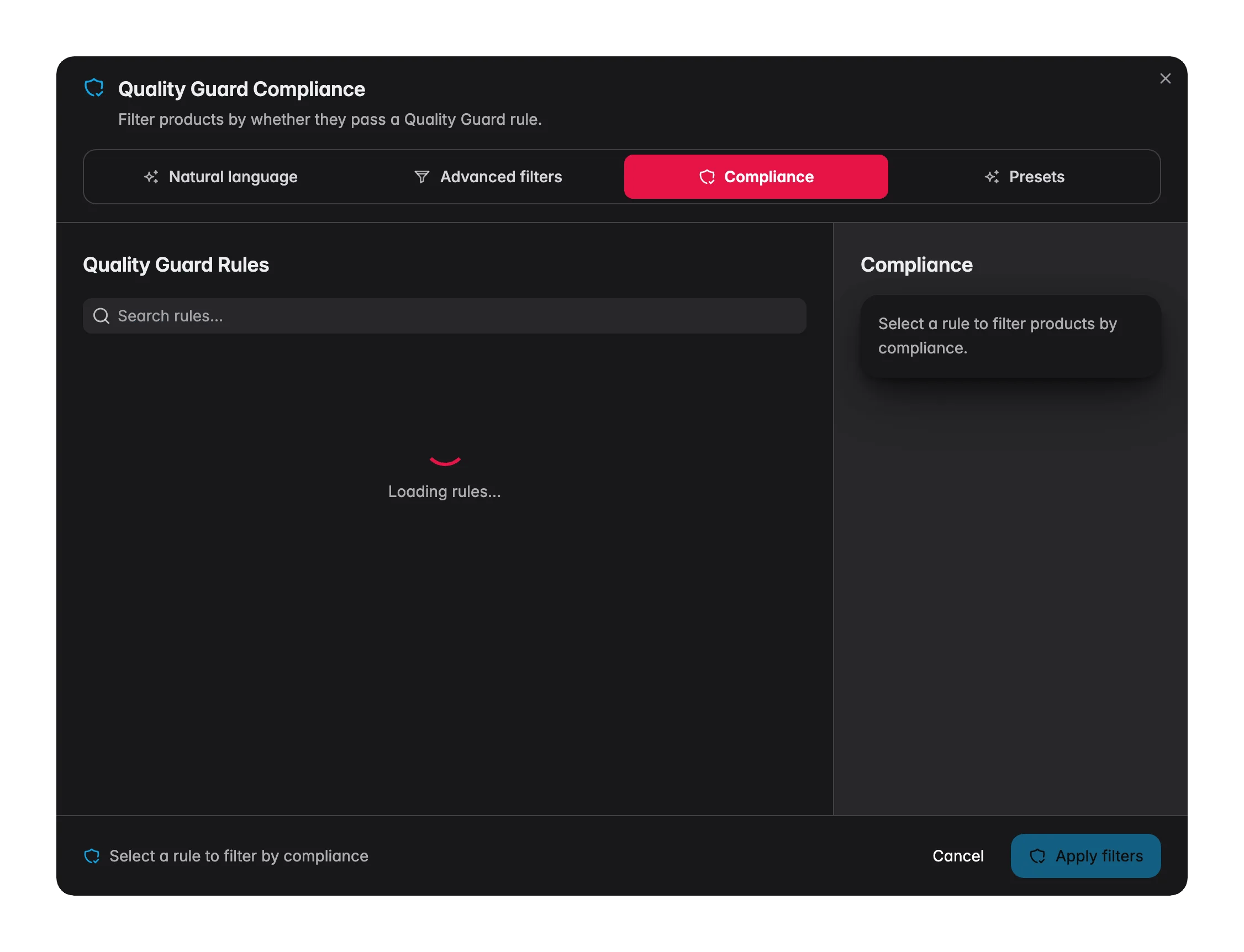
Click Filters on the Products page and open the Compliance tab. It filters your catalog to the products violating a specific rule, with a live count before you commit.
3
Fix the data, in bulk
Missing EAN, description too short, and no image are the usual triggers. Use bulk editing or another enrichment pass rather than editing one by one.
4
Resolve the queue
Back in Quarantine, use Bulk Resolve on the entries you fixed. One root cause often clears several rules at once.
5
Bypass only with a written reason
Bypassing releases a product despite the violation and records who approved it and why. Use it for genuine exceptions, not to clear a queue quickly.
Export, then verify what landed
Both routes start from the same Export button, and which one you want depends on whether you push or the channel pulls.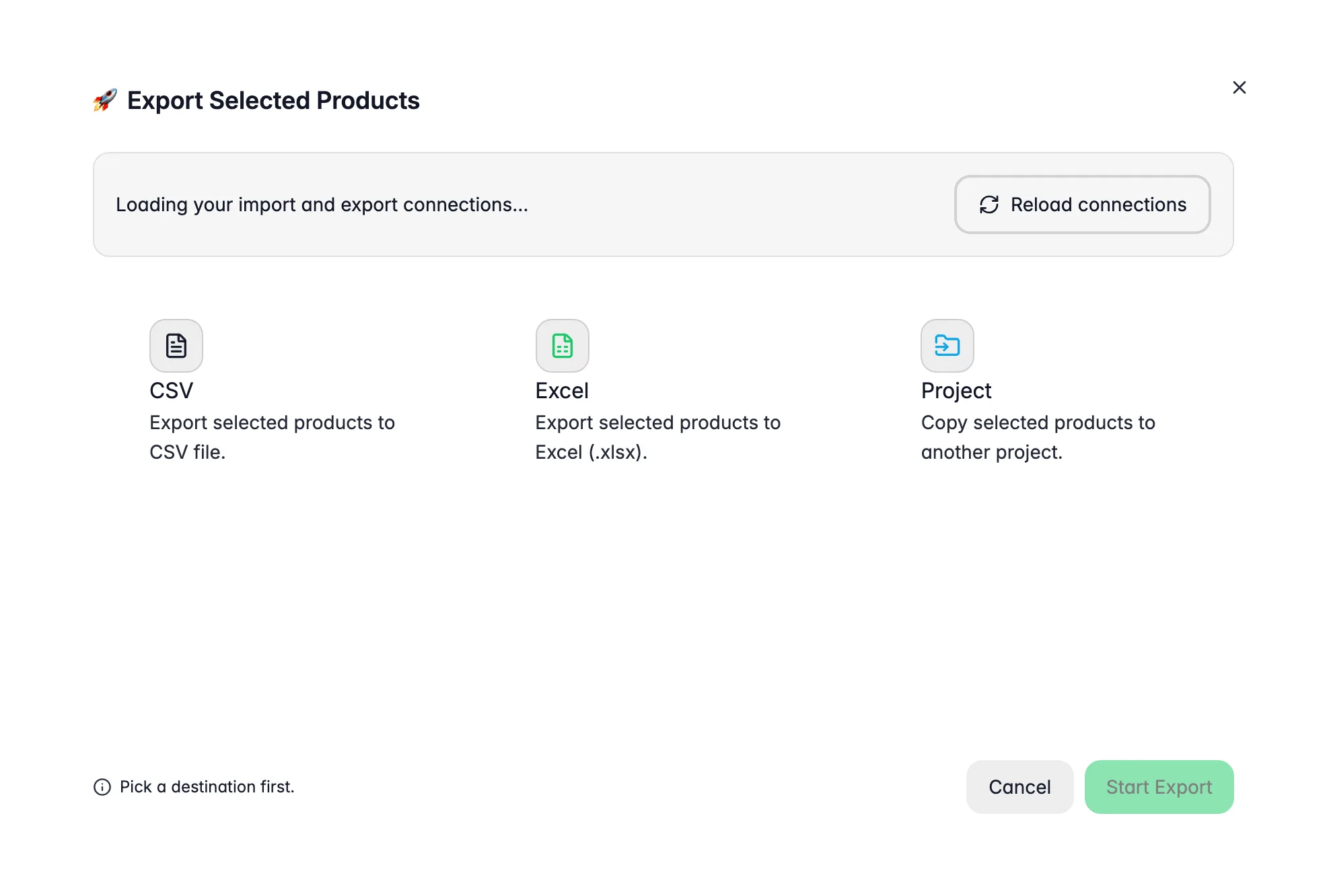
1
Select the products and open Export
On the Products page, select products or apply a filter, then open the Export button in the toolbar. File exports are always available; every other destination appears once the matching integration is connected.
2
Go with the defaults on the first run
Pick the destination and keep the default settings. Platform exports map fields sensibly on their own; a file export lets you pick columns as you go. Shaping exact columns and headers is a later refinement, not a prerequisite.
3
Check your pricing rules first
When Pricing & Margins rules are active, they add markup or margin at export time, per channel, so an exported price may not equal the price stored on the product. Your stored prices never change, and the master switch turns every rule off at once.
4
Understand skip-unchanged before your second run
It is on by default for platform exports and skips products that have not changed since the last export to that destination. That is what makes routine syncs fast, and also why a repeat export can legitimately send nothing.
5
Watch it, then spot-check the channel
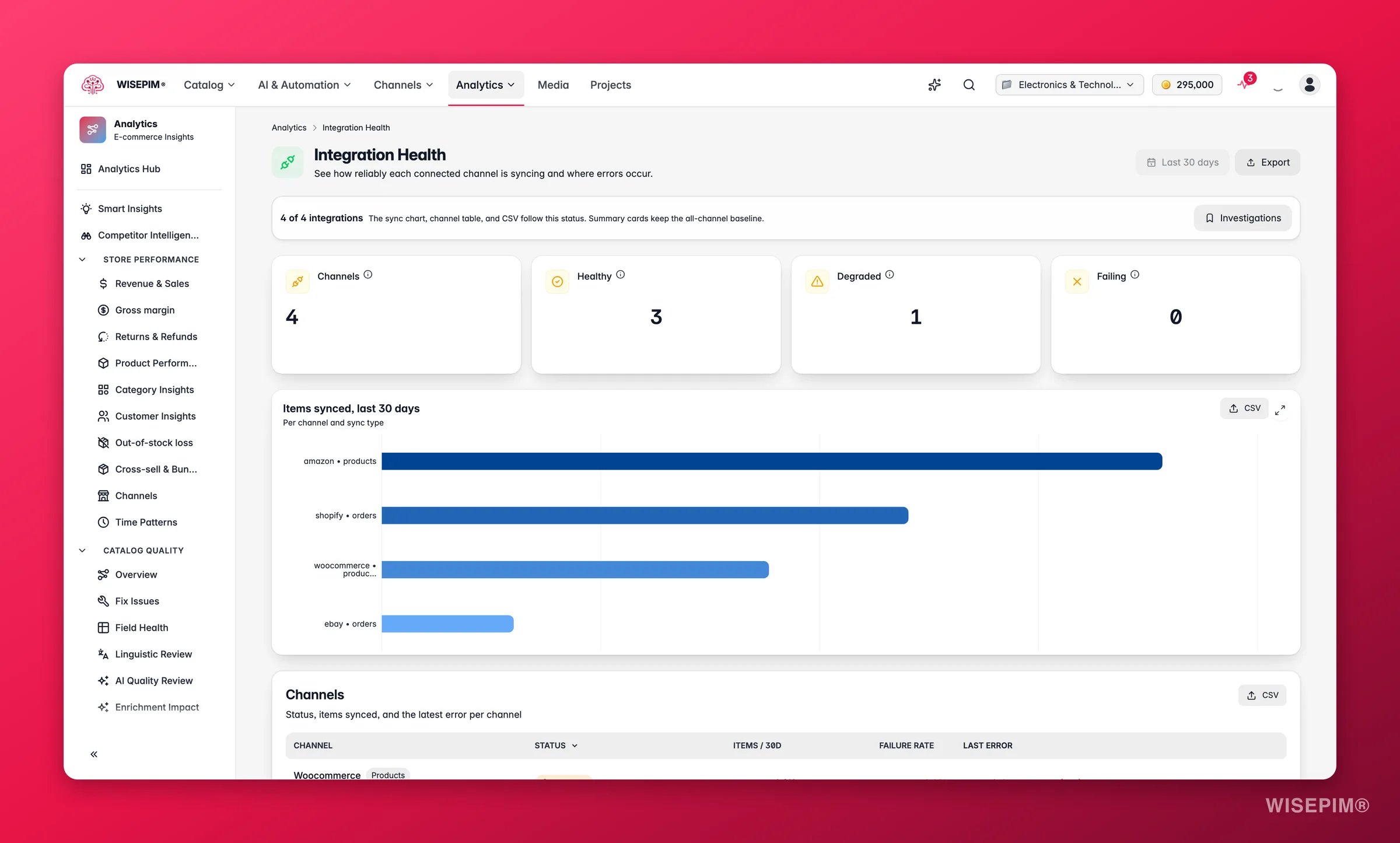
Exports run in the background with live status in the Process Tracker. When it completes, log into the store and open a few products to confirm what shoppers see.
Make the next publish one click
Once the first export looks right on the channel, save the setup as an export template: it fixes which fields go out, in what order, and under which column headers, and its three-product Preview catches a wrong header in seconds. Mark it default for the platform and every future publish to that destination reuses it automatically. Do this when a buyer or channel asks for specific columns - not before your first export.How to tell it worked
When it doesn’t work
Nothing was sent, everything was skipped
Nothing was sent, everything was skipped
With Skip unchanged on, products that have not changed since the last export to that platform are skipped on purpose. Turn it off to force a full re-export, for example after changing the channel’s settings.
Products are missing from the export
Products are missing from the export
Check Quarantine: products held by a Block rule cannot be exported, and Skip-severity rules leave products out silently. The queue names the rule and the field for each one.
The exported prices are not the prices in WISEPIM
The exported prices are not the prices in WISEPIM
Look at your pricing rules before hunting through product data. They transform prices on the way out, per channel, and turning off the master switch reverts every export to your stored prices immediately.
The buyer says the columns are wrong
The buyer says the columns are wrong
Rename the headers in your export template to match what they expect, then run the three-product preview to confirm before sending again.
The channel keeps rejecting products
The channel keeps rejecting products
Open Integration Health and read the last error message. Repeated authentication errors mean expired credentials; repeated validation errors name the missing field, which is a Quality Guard rule worth adding so it never reaches the channel again.
Related
Launch on a channel without rejections
Take the same catalog to a marketplace with its own rules.
Build a pipeline that runs itself
Promote this five-part run into an automation with a quality safety net.
Exporting products
Every destination, option, and troubleshooting path for exports.
Quality Guard
The rules that gate every export, sync, and publish.